Friday, November 30, 2012

Review for Third Closed-book Assessment

The third and final Closed-book Assessment takes place on Wednesday, December 5. The review sheet is now available. I am working on securing a place and time for a review session.

There will be a review session on Tuesday, December 4, at 4:00 PM in 103 Buckman Hall.

Thursday, November 29, 2012

Palestine Achieves "Non-member State" Status in UN

Today, the United Nations voted to uphold a resolution classifying Palestine as a "non-member state." Palestine had maintained "permanent observer" status in the UN since 1974.

Both the United States and Israel voted against the resolution, which passed by a 138-9 margin. The United Kingdom and forty other countries abstained.

Palestinian President Abbas characterized the vote as crucial to the two-state solution, while Israeli Prime Minister Netanyahu and US Secretary of State Clinton declared the move a step backwards in resolving the Israeli-Palestinian conflict.

The measure is largely symbolic, but does allow a Palestinian delegate to hold the floor in debates in the General Assembly. Votes on full membership are subject to veto by the permanent members of the Security Council, a power the US exercised last year to prevent the full accession of Palestine.

Implications?

Tuesday, November 27, 2012

The Israeli-Palestinian Conflict Expands into Cyberspace

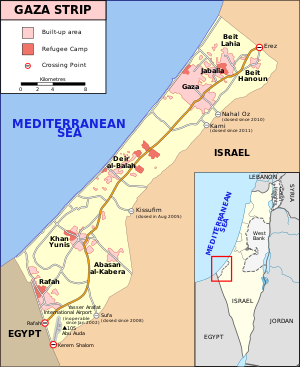
This story is a couple of weeks old. I'm sure you remember the recent outbreak of violence in Gaza, quelled by a recent ceasefire agreement. What you may not have noticed was that the conflict spilled out onto—of all places—Twitter.

Specifically, the Israeli Defense Force (IDF) and Hamas have been sniping at each other using the microblog service.
Hamas' claim that it has shelled "occupied" Tel Aviv… comes not from a news outlet, but from Hamas. And another tweet, from the Israel Defense Forces, assures me that, in fact, the Hamas rocket never reached Tel Aviv.
Do political actors actually manage to effect outcomes when they use services like Twitter (or Facebook, Tumblr, etc…) during truly violent conflicts like the one that recently occurred in Gaza, or is this just bluster?

Thursday, November 15, 2012

"Forget the West, our future is to the North"

Paul Keating, former Prime Minister of Australia, penned an op-ed today (or tomorrow, since it's tomorrow in Oz already) for the Sydney Morning Herald arguing for a northward turn in Australian foreign relations.

He argues that Australia can't tie its foreign policy to the US or to China, that it must take a third course, focusing on Indonesia (a candidate for the next ascendant economic and military power).

Keating writes:
While we will always have a close relationship with the US based on our shared history and our similar cultures, it is obvious that the right organising principle for our security is to be integral to the region.
From now on we have to concentrate on where we can be effective and where we can make the greatest difference. I believe that is fundamentally in south-east Asia.
Layne argues that the US will start to see states balancing against American hegemony. Is this an example of Layne's expectations? How problematic is an Australia that pulls away from the US-based security community?

Friday, November 2, 2012

Questions for Triage

Think about these questions in relation to the documentary we watched in class today, "Triage: Dr. James Orbinski's Humanitarian Dilemma." Share some of your answers in the comments for participation credit.

Preliminary Questions
  • Who are the main personalities in this documentary?
  • What perspectives do they provide about humanitarian crisis and intervention?
  • What biases may these personalities be harboring?
  • Might their biases skew the depiction of what occurred?

Content Questions
  • Who are the political actors in this story, and what roles do they play?
  • What does Dr. Orbinski say about what humanitarian intervention is and what it has become?
  • Politics is the exercise of power. In what ways does Dr. Orbinski exercise power?

Analysis Questions
  • What is the role of the military in these humanitarian crises?
  • What is Dr. Orbinski's position on the military role in humanitarian intervention?
  • In what ways is military intervention problematic during humanitarian crises?
  • What questions does this documentary raise for you?

If you didn't watch the film, or would like to watch it in unedited form, it's available on Netflix Instant for those of you who have an account.

Wednesday, October 24, 2012

Is the Navy Smaller Today Than in 1917? Does It Matter?

On the campaign trail, Mitt Romney criticized President Obama's foreign policy by citing that the Navy is the smallest it has been since 1916.

If you watched Monday's debate, you saw Mr. Romney raise the point again. The president, with no lack of snark, suggested that such comparisons are inaccurate. The Navy may be smaller, but by replacing battleships with aircraft carriers and nuclear submarines it remains the strongest navy on the planet.

Who's right? They both are, although Mr. Obama's claim is more relevant (snark notwithstanding).

A pair of infographics at Popular Science illustrate the problem. The US Navy in 2012 is indeed smaller, with fifty fewer active ships than 1917. On the other hand, we have eleven active carrier strike groups--equal to 50% of the total world deployment. Just one of those carrier strike groups could sink the entire US Navy in 1917, and probably any other navy it went up against: British, German, Japanese or otherwise.

Amphibious assault craft: USS Bataan
Photo courtesy: Wikipedia
In other words, it's not the number of ships in your navy, it's what you can do with them.

However, that the president is right about the power of the modern navy doesn't mean that his challenger is wrong about the overall message. Mr. Romney's point is that the Navy should be bigger than it is now in order to meet the unseen threats beyond our current time horizon.

Presidents Clinton, George W. Bush and Obama have overseen a transition from a navy that contained the Soviet Union to one more geared towards shoreline conflict and amphibious assault (in support of humanitarian missions and the War on Terror). Romney, on the other hand, argues that this is short-sighted, and that we rebuilding the Navy to deter a future great power war.

What do you think?

Sunday, October 21, 2012

Major Terror Attacks 1991-2011

Here's a bit of a preview of Monday's class. Posted below are three charts I designed based on data from the High Casualty Terrorist Bombings (HCTB) data set compiled and hosted by the Center for Systemic Peace.

The HCTB data set is a record of bombing attacks on civilian and political (non-combat) targets that result in fifteen deaths or more. The record runs from March 1991 through March 2012.

Using their data, I demonstrate the increasing rate of terror attacks and deaths from said attacks. The first chart below aggregates the data by year: annual deaths in red (left axis), annual attacks in blue (right axis). Note the spike in 2001 and the peak in 2007.

Click images to enlarge. More charts after the jump.


Wednesday, October 17, 2012

Distribution of Power and the UN Security Council

Charts from Wednesday's Class. Click to enlarge. Data are from the Correlates of War Project's Composite Index of National Capabilities data set (version 3.02).


Monday, October 15, 2012

Argo

You may already be aware of the recently released film, Argo, that takes place during the Islamic Revolution and the Iran Hostage Crisis. It debuted to widespread critical acclaim and is playing locally.

In Argo, Ben Affleck plays a CIA operative who launches an undercover operation to extract American consular officials who evaded the student demonstrators that occupied the US Embassy in Tehran.

The story is largely true, although the usual caveats of poetic license apply. Considering our recent class discussion of the Islamic Revolution, as well as the recent attack on the US consulate in Benghazi, Libya, the episode is pertinent to both course matter and current events.

Whether or not you intend to see the picture, you might be interested in this article from Wired Magazine that provides a well-written account of the CIA role the operation.

The primary flaw in the article seems to be the same as in the movie: it minimizes the role of Canadian officials who were so instrumental in the safe return of the Americans. That is intentional, however. Whereas journalists blew the cover off the Canadian operation almost immediately--somewhat obviating the novelty of the caper--the CIA documents remained classified for years.

This is the story about which we didn't already know.

If you've seen the movie or would otherwise like to discuss the caper, feel free to share in the comments.

Saturday, October 13, 2012

Research Paper Groups

Group 1: The Sino-Soviet-American Triangle
James Fletcher
David Klemperer
Mariafiore Miniussi
Andrew Wallis

Group 2: American Interventionism
Sophia Anderson
Chloe Bootstaylor
Mary Catherine Cadden
Lucy Gregor

Group 3: Demographics and Popular Upheavel
Alexandria Cornwall
Sarah Baumann
Will Gietema

Group 4: The Post-Communist World
Amber Baade
Maria Barnett
Chloe Bryan

Group 5: Nuclear Proliferation
Aaron Banks
Morgan Smathers
Macon Wilson

Group 6: Genocide
Clayton Christian
Kristal Skrmetta
Lizzie Williams

Group 7: Partitioned States
Collin Beach
Andy Chen
Jacky Ullemeyer

Group 8: Political Islam and Related Issues
Rhiannon Mancinelli
Cameron McGarrah
Margit Mikkelsen

Tuesday, October 9, 2012

Review Questions and Vocabulary for 9/28 - 10/8

The Middle East (9/28 - 10/5)

Vocabulary
  • Indivisible Issues

Questions
  • What kept the US and USSR from fighting over the Middle East?
  • What roles did the US and USSR play in Israel, Egypt and Iran during the Cold War?
  • Is US involvement in the Middle East an example of offshore balancing or a hegemonic strategy leading to imperial overstretch?
  • (Not discussed in class) What leads some ethnicities or nationalities to fight one another, when others can live together in relative peace?

Vietnam (10/8)

Vocabulary
  • Winning Hearts and Minds
  • Asymmetrical Warfare
  • Guerilla Warfare
  • People’s War
  • Limited Warfare

Questions
  • When did the US first get involved in Vietnam?
  • How did the US get involved in Vietnam and why?
  • Why was “winning hearts and minds” so important?
  • Whom did the US initially put in charge of South Vietnam, and what kind of regime did he impose?
  • What’s the difference between the Vietminh and the Vietcong?
  • What factors can keep a more powerful actor from defeating a far less powerful one?
  • What does it mean to fight a “limited war?” What exactly are you limiting?
  • Why were the North Vietnamese so much more resolute than the Americans?
  • Why, if LBJ had such doubts about US involvement in Vietnam, did he escalate instead of pulling out?
  • What sorts of miscalculations did the US commit in regards to Vietnam?
  • What was the aftermath of the US experience in Vietnam?

Friday, October 5, 2012

Will the Arab Spring Come to Jordan?

Jordan's King Abdullah II
Under pressure from domestic Islamists, Jordan's King Abdullah II is offering concessions to devolve power to the parliament and the people. The Muslim Brotherhood says it's not enough.
The party list system favors larger coalitions with an ideological agenda such as the Islamists, while the district-based system tends to return tribal pro-government candidates who muster local support from their particular clan and relatives.
But the Brotherhood and others say...that the elections will result in an ineffective parliament filled with palace loyalists.
This is yet another example of the type of bottom-up pressures that Middle Eastern leaders have faced since the deposition of Shah Pahlavi and, more recently and appropriate to the Arab context, since the uprisings in Egypt and Tunisia.

The question is, will the reforms lead to any substantive change, and will that change look more like Egypt's revolution or Tunisia's?

Thursday, September 20, 2012

Review for First Closed-book Assessment

The First Closed-book Assessment is scheduled for Wednesday's class. Linked below is the review sheet. I will pass out review sheets in class on Friday morning, but I thought some of you might want to get a jump on studying.

Download review sheet for First Closed-book Assessment.

I am currently working on scheduling a review session during my typical office hours on Monday (3-4 PM). Once I do, I will inform you via class, blog and email.

Update: I have reserved 220 Buckman Hall from 3-4 PM on Monday, September 24 for our review session.

If you cannot participate in the review session due to a scheduling conflict, feel free to come to my office hours on Friday or schedule another time with me on Friday, Monday or Tuesday.

During review sessions, I will not typically answer questions directly. I will first ask you or your fellow classmates to try to answer your questions for you. I will fill in any gaps or correct any misconceptions that arise.

Tuesday, September 18, 2012

Operation: Little Vittles

Recently, in class, we read about the Berlin Blockade and the subsequent Berlin Airlift. The official code name for the Airlift was Operation: Vittles. But there was also a sub-mission that took place within the context of the Airlift called Operation: Little Vittles.


This post in Mental Floss depicts the operation. You should read the whole piece, but the short story is that a USAF pilot, Lt. Gail Halvorsen made the day for some young, starving West Berliners when he dropped a payload of American chocolate candy.

While in doing so he was technically violating regulations, Operation: Vittles' commanding officer recognized the psychological benefit of Halvorsen's mission and initiated a series of daily candy drops.

In the end, the Airlift thwarted Stalin's plans to isolate West Germany via blockade and demonstrated the American commitment to the welfare of West Berlin, thereby making credible the general US commitment to the welfare of all Western Europeans.

What do Operation: Vittles and Operation: Little Vittles say about the Cold War (in specific) and about the sources of power (in general)?

Wednesday, September 12, 2012

Class Questions, September 7-14

September 7
How might the following events be perceived as acts of aggression? as self-defense?
  • The Truman Doctrine
  • The Marshall Plan
  • The Soviet takeover in Poland
  • The unification of West Germany
  • The expansion of NATO into Eastern Europe
  • The Wars in Afghanistan and Iraq
  • An hypothetical intervention in Syria?

September 10
  • What is autarky?
  • Why did the typically isolationist US agree to provide the UK with Lend-Lease aid?
  • Why was the US so concerned with constructing a new world economic order?
  • Why would the US and UK want (West) Germany to regain its former strength?
  • Why was the US preoccupied with an integrated European economy?
  • Besides the potential threat from Moscow, what foreign threats motivated the US to construct the postwar security and economic orders?
  • Layne posits that the US would have pursued this policy even if the Soviet Union “didn’t exist.” Do you agree? Why or why not?

(more recent classes after the jump)

Sunday, September 9, 2012

Convergence

At the moment, you're reading about a period in history during which the world was split between two contrasting factions. Both powerful, one was capitalist and democratic, the other was communist and autocratic.

Today however, it seems like we're all moving the same direction, if at different paces. China opened up its economy and commenced a profitable march towards capitalism with Deng Xiaoping in the early 1980s. Russia did the same in 1991, albeit with far less success.

At a recent summit, both Chinese and Russian delegates extolled the virtues of low trade barriers, while Secretary Clinton called for stronger trade ties with Moscow.

What might be the international security implications of trade integration among these three, once very different, political economies? Why?

Thursday, September 6, 2012

Review for Wednesday, September 5

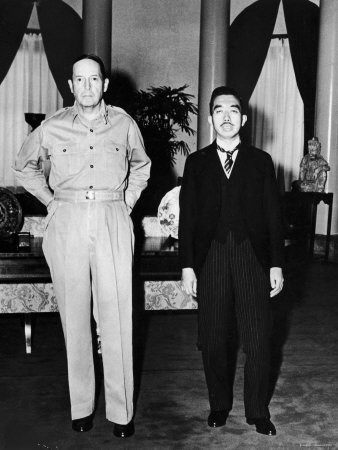
Gen. MacArthur &
Emperor Hirohito
Below is a list of questions that we discussed in class this past Wednesday:
  • In what way does having a global security interest indicate hegemonic aims?
  • Is a policy of preemption or prevention an indicator of hegemonic aims? How about a global network of naval and air bases?
  • Might there be defensive, non-expansionist reasons for seeing security interests all over the globe, for wanting to revise the international system?
  • Might there be non-hegemonic reasons for maintaining a global system of military bases?
  • If some policymakers in high ranking positions are calling for hegemony, does that make the state in question hegemonic?
Feel free to address these questions for participation points.

Tuesday, August 28, 2012

Review for Monday, August 27

(not so much that last thing)
There were no slides for Monday's class that I can post here, so I figured it might help to post the vocabulary words we went over and the questions we addressed.

Vocabulary
  • Polarity
  • Hegemon(y)
  • Offshore Balancing
  • Grand Strategy
  • Imperial Overstretch
  • Grand Strategy
  • "Open Door" Diplomacy
  • Parsimony
  • Security Dilemma
  • Structural Theory
  • Systemic vs. Domestic Variables

Questions
  • How can we tell the difference between a grand strategy of offshore balancing and one of hegemony?
  • Layne claims that a US focused on offshore balancing would retreat from Europe, East Asia and the Middle East and encourage a multipolar system. Is this accurate? Why would this be the case? Why might it not be?

If you have any questions or would like some clarification about the terms and questions presented above, feel free to ask about them in the comments. Bonus participation points to anyone who helps answer another student's question.

Monday, August 27, 2012

Expanding the North Atlantic Treaty Organization

NATO: Haqqani death "a blow" to Taliban, if true
A spokeswoman for NATO's International Security Assistance Force said in a statement to CBS News correspondent Kitty Logan Monday that the coalition wasn't in a position to confirm Haqqani's death but that, if true, it would be "significant." "Badruddin Haqanni is responsible for a number of high-profile suicide attacks in and around the Kabul area," the ISAF statement said.
NATO, originally a collective security alliance to deter Soviet aggression in Europe, has survived and expanded following the fall of the USSR. The current mission in Afghanistan is but one example: NATO forces have seen action in Kosovo and, more recently, Libya.

Does NATO's expansion and commitments to areas outside its original purview signal an expansion of American power? Or might there be some other motive behind the extension of the security community beyond the North Atlantic?

Tuesday, August 21, 2012

Syria, the US and Russia

Russia warns West over Syria after Obama threats
Russia warned the West on Tuesday against unilateral action on Syria, a day after U.S. President Barack Obama threatened "enormous consequences" if his Syrian counterpart used chemical or biological arms or even moved them in a menacing way... Russian Foreign Minister Sergei Lavrov, speaking after meeting China's top diplomat, said Moscow and Beijing were committed to "the need to strictly adhere to the norms of international law ... and not to allow their violation".
Read the article linked above and share your analysis of this situation in the comments. Why should Americans care about what goes on in Syria? Why would Russia and China be upset about the potential for American intervention?