Tuesday, November 27, 2012

The Israeli-Palestinian Conflict Expands into Cyberspace

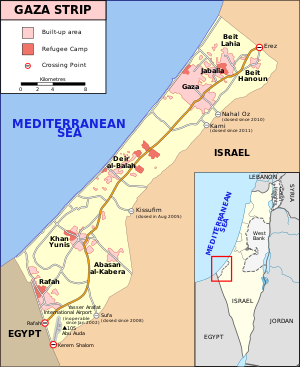
This story is a couple of weeks old. I'm sure you remember the recent outbreak of violence in Gaza, quelled by a recent ceasefire agreement. What you may not have noticed was that the conflict spilled out onto—of all places—Twitter.

Specifically, the Israeli Defense Force (IDF) and Hamas have been sniping at each other using the microblog service.
Hamas' claim that it has shelled "occupied" Tel Aviv… comes not from a news outlet, but from Hamas. And another tweet, from the Israel Defense Forces, assures me that, in fact, the Hamas rocket never reached Tel Aviv.
Do political actors actually manage to effect outcomes when they use services like Twitter (or Facebook, Tumblr, etc…) during truly violent conflicts like the one that recently occurred in Gaza, or is this just bluster?

Thursday, November 15, 2012

"Forget the West, our future is to the North"

Paul Keating, former Prime Minister of Australia, penned an op-ed today (or tomorrow, since it's tomorrow in Oz already) for the Sydney Morning Herald arguing for a northward turn in Australian foreign relations.

He argues that Australia can't tie its foreign policy to the US or to China, that it must take a third course, focusing on Indonesia (a candidate for the next ascendant economic and military power).

Keating writes:
While we will always have a close relationship with the US based on our shared history and our similar cultures, it is obvious that the right organising principle for our security is to be integral to the region.
From now on we have to concentrate on where we can be effective and where we can make the greatest difference. I believe that is fundamentally in south-east Asia.
Layne argues that the US will start to see states balancing against American hegemony. Is this an example of Layne's expectations? How problematic is an Australia that pulls away from the US-based security community?

Friday, November 2, 2012

Questions for Triage

Think about these questions in relation to the documentary we watched in class today, "Triage: Dr. James Orbinski's Humanitarian Dilemma." Share some of your answers in the comments for participation credit.

Preliminary Questions
  • Who are the main personalities in this documentary?
  • What perspectives do they provide about humanitarian crisis and intervention?
  • What biases may these personalities be harboring?
  • Might their biases skew the depiction of what occurred?

Content Questions
  • Who are the political actors in this story, and what roles do they play?
  • What does Dr. Orbinski say about what humanitarian intervention is and what it has become?
  • Politics is the exercise of power. In what ways does Dr. Orbinski exercise power?

Analysis Questions
  • What is the role of the military in these humanitarian crises?
  • What is Dr. Orbinski's position on the military role in humanitarian intervention?
  • In what ways is military intervention problematic during humanitarian crises?
  • What questions does this documentary raise for you?

If you didn't watch the film, or would like to watch it in unedited form, it's available on Netflix Instant for those of you who have an account.

Wednesday, October 24, 2012

Is the Navy Smaller Today Than in 1917? Does It Matter?

On the campaign trail, Mitt Romney criticized President Obama's foreign policy by citing that the Navy is the smallest it has been since 1916.

If you watched Monday's debate, you saw Mr. Romney raise the point again. The president, with no lack of snark, suggested that such comparisons are inaccurate. The Navy may be smaller, but by replacing battleships with aircraft carriers and nuclear submarines it remains the strongest navy on the planet.

Who's right? They both are, although Mr. Obama's claim is more relevant (snark notwithstanding).

A pair of infographics at Popular Science illustrate the problem. The US Navy in 2012 is indeed smaller, with fifty fewer active ships than 1917. On the other hand, we have eleven active carrier strike groups--equal to 50% of the total world deployment. Just one of those carrier strike groups could sink the entire US Navy in 1917, and probably any other navy it went up against: British, German, Japanese or otherwise.

Amphibious assault craft: USS Bataan
Photo courtesy: Wikipedia
In other words, it's not the number of ships in your navy, it's what you can do with them.

However, that the president is right about the power of the modern navy doesn't mean that his challenger is wrong about the overall message. Mr. Romney's point is that the Navy should be bigger than it is now in order to meet the unseen threats beyond our current time horizon.

Presidents Clinton, George W. Bush and Obama have overseen a transition from a navy that contained the Soviet Union to one more geared towards shoreline conflict and amphibious assault (in support of humanitarian missions and the War on Terror). Romney, on the other hand, argues that this is short-sighted, and that we rebuilding the Navy to deter a future great power war.

What do you think?
Sunday, October 21, 2012

Major Terror Attacks 1991-2011

Here's a bit of a preview of Monday's class. Posted below are three charts I designed based on data from the High Casualty Terrorist Bombings (HCTB) data set compiled and hosted by the Center for Systemic Peace.

The HCTB data set is a record of bombing attacks on civilian and political (non-combat) targets that result in fifteen deaths or more. The record runs from March 1991 through March 2012.

Using their data, I demonstrate the increasing rate of terror attacks and deaths from said attacks. The first chart below aggregates the data by year: annual deaths in red (left axis), annual attacks in blue (right axis). Note the spike in 2001 and the peak in 2007.

Click images to enlarge. More charts after the jump.


Wednesday, October 17, 2012

Distribution of Power and the UN Security Council

Charts from Wednesday's Class. Click to enlarge. Data are from the Correlates of War Project's Composite Index of National Capabilities data set (version 3.02).


Monday, October 15, 2012

Argo

You may already be aware of the recently released film, Argo, that takes place during the Islamic Revolution and the Iran Hostage Crisis. It debuted to widespread critical acclaim and is playing locally.

In Argo, Ben Affleck plays a CIA operative who launches an undercover operation to extract American consular officials who evaded the student demonstrators that occupied the US Embassy in Tehran.

The story is largely true, although the usual caveats of poetic license apply. Considering our recent class discussion of the Islamic Revolution, as well as the recent attack on the US consulate in Benghazi, Libya, the episode is pertinent to both course matter and current events.

Whether or not you intend to see the picture, you might be interested in this article from Wired Magazine that provides a well-written account of the CIA role the operation.

The primary flaw in the article seems to be the same as in the movie: it minimizes the role of Canadian officials who were so instrumental in the safe return of the Americans. That is intentional, however. Whereas journalists blew the cover off the Canadian operation almost immediately--somewhat obviating the novelty of the caper--the CIA documents remained classified for years.

This is the story about which we didn't already know.

If you've seen the movie or would otherwise like to discuss the caper, feel free to share in the comments.